
In short
- Register with HMRC, get public liability insurance and sort waste and spraying licences before the first job.
- Build around regular maintenance clients so the van is paid for before one-off work comes in.
- Choose a system you can keep when you hire, so you only ever set your clients up once.
Pick your work and your patch
Decide what you are selling before you buy anything. Maintenance rounds give steady income. Clearances pay well per job, but you pay for disposal and some weeks are empty. Landscaping ties up cash in stone and timber and needs more skill and kit.
Most new businesses start with maintenance and take other work as it comes. Keep the patch tight as well. A forty-minute drive each way to cut one lawn eats most of what you charge for it.
Registration, insurance and licences
Rules change, so check GOV.UK and your insurer rather than copying what someone did five years ago. These figures were checked in October 2026.
For the van and kit, see what it costs to start a landscaping business, which covers maintenance rounds too, and our gardening business equipment list.
- Register as self-employed with HMRC, or set up a limited company.
- Get public liability insurance before your first job. For garden maintenance it is often around £75 to £120 a year.
- Register as a waste carrier if you will take green waste away. Upper tier registration in England is £191, renewed every three years for £130.
- Get PA1 and PA6 before using professional weedkillers. The two courses cost roughly £450 to £750 together.
- Open a separate bank account so business money never mixes with yours.
Build a round that pays for the van
Regular clients smooth cash flow and tighten your routes. Aim first for enough regular visits to cover your fixed costs each month. After that, one-off jobs go towards wages and savings.
Price regular work properly from day one. Putting the price up for someone you've undercharged for a year is an awkward conversation.
Fieldfare
Set your clients up once and keep them when you hire
Where to keep your client details
In month one a notebook and a phone calendar feel like plenty. By the second spring you have forty clients, gate codes buried in texts and a helper ringing for addresses. Moving all that into software in April, with the grass growing, is a miserable week.
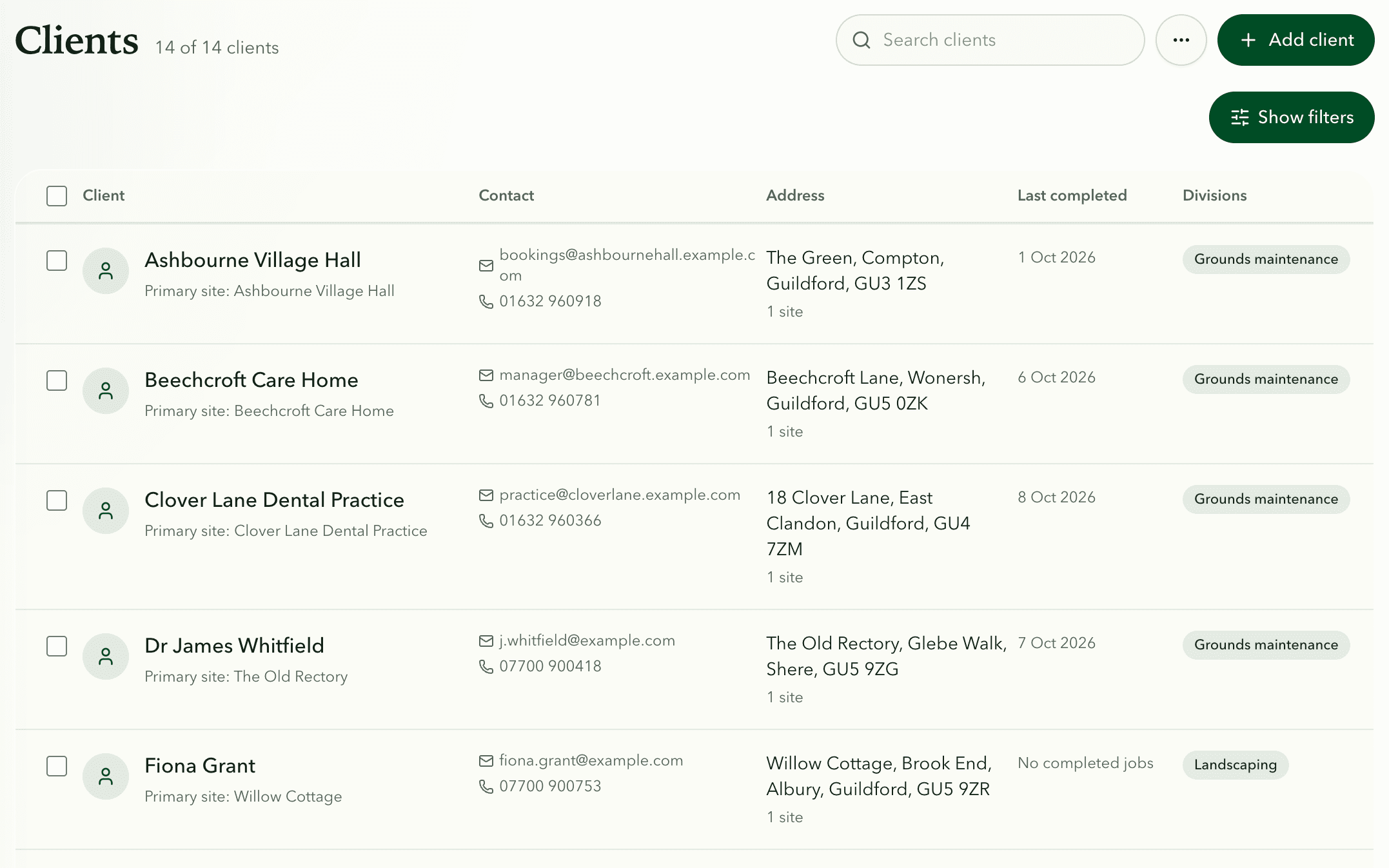
With Fieldfare you add a client once, with the gate code and where the green waste goes, set their fortnightly Tuesday visit, and it appears on your calendar every other Tuesday from then on. As a sole trader that's most of what you'll use: clients, sites, the schedule and invoices.
The staff app, timesheets, holidays and RAMS sign-offs are there for when you hire. The price stays at £49 a month for the whole business, up to 99 users, every feature included.
What clients expect from a new gardener
Clients don't mind that you're new. They do mind a reply that takes a week, or you not turning up on the day you said. Get those right and referrals follow. Our guide to getting more gardening clients picks up from there.
Take before and after photos on every job. They answer most questions about what was done, and they're the best thing to put on your website.
Send a clear invoice the day the work is finished. Fieldfare makes simple PDF invoices and you mark them paid when the money arrives. It doesn't take card payments, so clients pay straight into your own bank with no per-payment fees.
Starting out: quick answers
How much does it cost to start a gardening business?
From under £1,000 if you already have a vehicle and basic tools, up to around £7,000 to £17,000 with a used van, professional kit, insurance and the licences you need.
Do I need qualifications to start a gardening business?
Not for general maintenance, though horticultural qualifications help with credibility and pricing. You do need a certificate to apply professional pesticides, and training is sensible for chainsaws and other higher-risk kit.
How many clients do I need to go full-time?
Work backwards from your costs and the income you need, then divide by your average price per visit. Check the visits that gives you fit a realistic week once travel is included.
Should I buy a van straight away?
Many people start with a car and trailer or a small used van, then upgrade once the round is steady.