Back to ResourcesGrowth guide

How to Get More Gardening Clients and Keep the Good Ones Longer

A practical growth guide for gardeners who want steadier enquiries, better follow-up, and more repeat work without making the business harder to run.

At a glance

  • Better growth often comes from clearer offers and stronger follow-up before it comes from more marketing.
  • Retention matters because repeat clients improve route density, revenue quality, and planning confidence.
  • Growth feels much easier when new enquiries can move cleanly into quotes, jobs, and repeat work.

Fix the pipeline before chasing more leads

Many gardening businesses lose growth in the gap between first enquiry and properly followed-up work.

Before spending more time on marketing, make sure replies are prompt, quotes are clear, and the business has a simple way to see what still needs attention.

A lot of growth friction is really an operations problem wearing a marketing label.

Businesses often think they need more leads when the bigger issue is that the office is too stretched to quote, schedule, follow up, and bill cleanly once those leads arrive.

That is why better systems often feel like growth work even though they are not marketing in the classic sense.

A clearer operating model makes it easier to win, retain, and actually profit from the work you are already close to getting.

Growth is easier when the system is ready

Growth also gets easier when the business knows what kind of work it wants more of.

Repeat maintenance, profitable one-off tidy-ups, and more complex landscaping projects all behave differently, so the systems around them need to be clear enough that the team is not just saying yes to everything and sorting the consequences out later.

The practical goal is to make growth easier to absorb.

If a better lead flow simply creates more open quotes, more messy scheduling, and more delayed invoicing, the business will feel busier without necessarily becoming stronger.

That is why the strongest growth choices often look quite operational from the outside.

Tightening the client record, improving follow-up, protecting route quality, or clarifying your service mix can create better results than another burst of generic promotion that the business is not yet set up to handle well.

Make the offer easy to understand

Clients say yes more often when the service feels clear, specific, and dependable.

That usually means a tidy quote, an obvious visit pattern, and a simple explanation of what is included rather than a vague promise to 'sort the garden out'.

A lot of growth friction is really an operations problem wearing a marketing label.

Businesses often think they need more leads when the bigger issue is that the office is too stretched to quote, schedule, follow up, and bill cleanly once those leads arrive.

That is why better systems often feel like growth work even though they are not marketing in the classic sense.

A clearer operating model makes it easier to win, retain, and actually profit from the work you are already close to getting.

Growth is easier when the system is ready

Growth also gets easier when the business knows what kind of work it wants more of.

Repeat maintenance, profitable one-off tidy-ups, and more complex landscaping projects all behave differently, so the systems around them need to be clear enough that the team is not just saying yes to everything and sorting the consequences out later.

The practical goal is to make growth easier to absorb.

If a better lead flow simply creates more open quotes, more messy scheduling, and more delayed invoicing, the business will feel busier without necessarily becoming stronger.

That is why the strongest growth choices often look quite operational from the outside.

Tightening the client record, improving follow-up, protecting route quality, or clarifying your service mix can create better results than another burst of generic promotion that the business is not yet set up to handle well.

Why Fieldfare

Turn enquiries into repeat work more cleanly

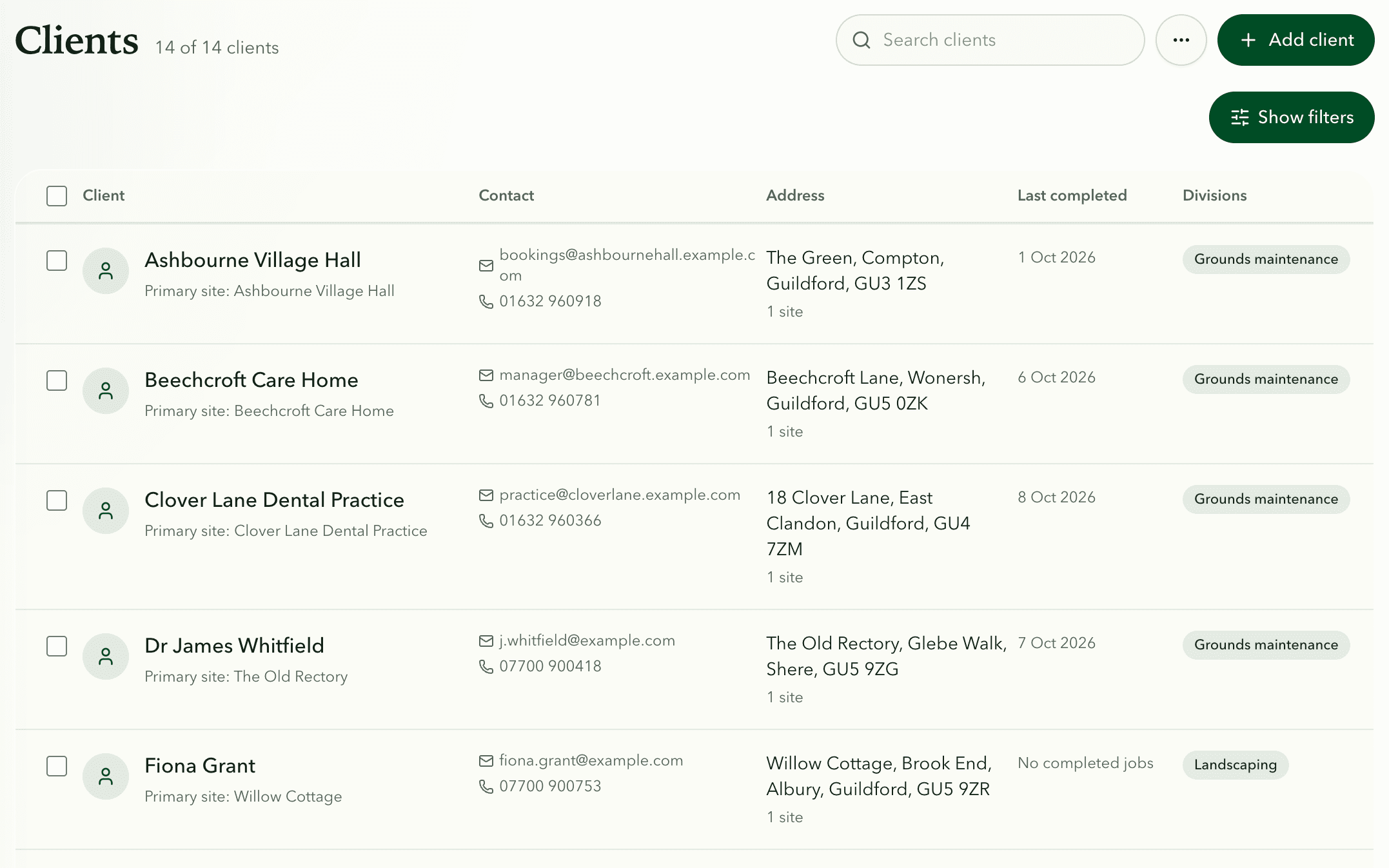
Fieldfare helps you keep client records, quotes, jobs, recurring work, and billing connected so good leads do not get lost in the handover.

Focus on retention, not just acquisition

Good repeat clients compound because they are easier to route, easier to plan around, and cheaper to keep than to replace.

The basics that improve retention are usually operational: turning up reliably, keeping notes straight, and following through on agreed work without friction.

A lot of growth friction is really an operations problem wearing a marketing label.

Businesses often think they need more leads when the bigger issue is that the office is too stretched to quote, schedule, follow up, and bill cleanly once those leads arrive.

That is why better systems often feel like growth work even though they are not marketing in the classic sense.

A clearer operating model makes it easier to win, retain, and actually profit from the work you are already close to getting.

Growth is easier when the system is ready

Growth also gets easier when the business knows what kind of work it wants more of.

Repeat maintenance, profitable one-off tidy-ups, and more complex landscaping projects all behave differently, so the systems around them need to be clear enough that the team is not just saying yes to everything and sorting the consequences out later.

The practical goal is to make growth easier to absorb.

If a better lead flow simply creates more open quotes, more messy scheduling, and more delayed invoicing, the business will feel busier without necessarily becoming stronger.

That is why the strongest growth choices often look quite operational from the outside.

Tightening the client record, improving follow-up, protecting route quality, or clarifying your service mix can create better results than another burst of generic promotion that the business is not yet set up to handle well.

Build a follow-up habit into the workflow

The simplest growth gains often come from asking what should happen next after a quote, a first visit, or a one-off tidy-up.

If the system makes that next step visible, the business stops relying on memory and gets better at turning good one-off jobs into ongoing relationships.

A lot of growth friction is really an operations problem wearing a marketing label.

Businesses often think they need more leads when the bigger issue is that the office is too stretched to quote, schedule, follow up, and bill cleanly once those leads arrive.

That is why better systems often feel like growth work even though they are not marketing in the classic sense.

A clearer operating model makes it easier to win, retain, and actually profit from the work you are already close to getting.

Growth is easier when the system is ready

Growth also gets easier when the business knows what kind of work it wants more of.

Repeat maintenance, profitable one-off tidy-ups, and more complex landscaping projects all behave differently, so the systems around them need to be clear enough that the team is not just saying yes to everything and sorting the consequences out later.

The practical goal is to make growth easier to absorb.

If a better lead flow simply creates more open quotes, more messy scheduling, and more delayed invoicing, the business will feel busier without necessarily becoming stronger.

That is why the strongest growth choices often look quite operational from the outside.

Tightening the client record, improving follow-up, protecting route quality, or clarifying your service mix can create better results than another burst of generic promotion that the business is not yet set up to handle well.

Common questions about getting more gardening clients

What is the practical goal behind this guide? To make the business easier to run, not just to add another layer of theory.

The right answer is usually the one that reduces repeat admin and improves control at the same time.

How should these ideas be used?

Treat them as working checks, then adapt them to the type of work, route shape, and commercial model you are actually building around.

What should improve first? Usually the part of the workflow that keeps slowing everything else down: quoting, follow-up, scheduling, client records, or billing.

Fixing that pressure point often unlocks the next improvement naturally.

Why Fieldfare

Turn enquiries into repeat work more cleanly

Fieldfare helps you keep client records, quotes, jobs, recurring work, and billing connected so good leads do not get lost in the handover.