
In short
- A page or two covering visits, scope, extras, price and notice is enough for most domestic clients.
- Hedges, trees and green waste cause a lot of disputes, so be specific about them.
- Link the contract to the regular jobs your staff do, or the two drift apart.
What the contract needs to cover
Most domestic contracts fit on two pages. These are the points clients come back to when there's a disagreement.
- Visit pattern: how often, which day, and how it changes through the year.
- Visit length: the usual time on site.
- Scope: what every visit includes.
- Exclusions: what gets quoted separately.
- Materials and waste: who supplies what, and where the clippings go.
- Extras: how extra work is agreed and charged.
- Price: per visit or monthly, and how often it's reviewed.
- Payment: how often you invoice and when payment is due.
- Missed visits: what happens when weather or access stops you.
- Notice: how either side ends the agreement.
Visits: how often, how long, which months
Spell out how the pattern shifts with the seasons, for example weekly lawn cuts from April to September and monthly visits from October to March. If it only says 'regular visits', expect a call in November asking why you've stopped coming.
Add the usual time on site. It sets expectations and gives you a fair basis for revisiting the price if the garden changes.
Hedges, trees and extra work
Say which hedges are included, how often they're cut and to what height. Trees, fences and big clearances are the usual 'I thought that was covered' moments, so name them as exclusions.
For extras, anything outside the normal scope is quoted first, and small jobs under an agreed amount are done and added to the next invoice.
Cover price rises too: how often you review prices, how much notice you give, and what happens if the client doesn't agree.
Fieldfare
Keep contracts and renewal dates with the jobs they cover
Payment, missed visits and notice
Say whether you invoice per visit or monthly and when payment is due. A fixed monthly amount suits seasonal patterns and keeps your cash flow steady through winter.
Then say what happens when rain or a locked gate stops a visit (rebooked, skipped or credited), and how many weeks' notice either side gives to end the agreement.
Keep the contract next to the work
A contract in a drawer drifts away from the work. Visits get added, and a year later nobody is sure what was agreed.
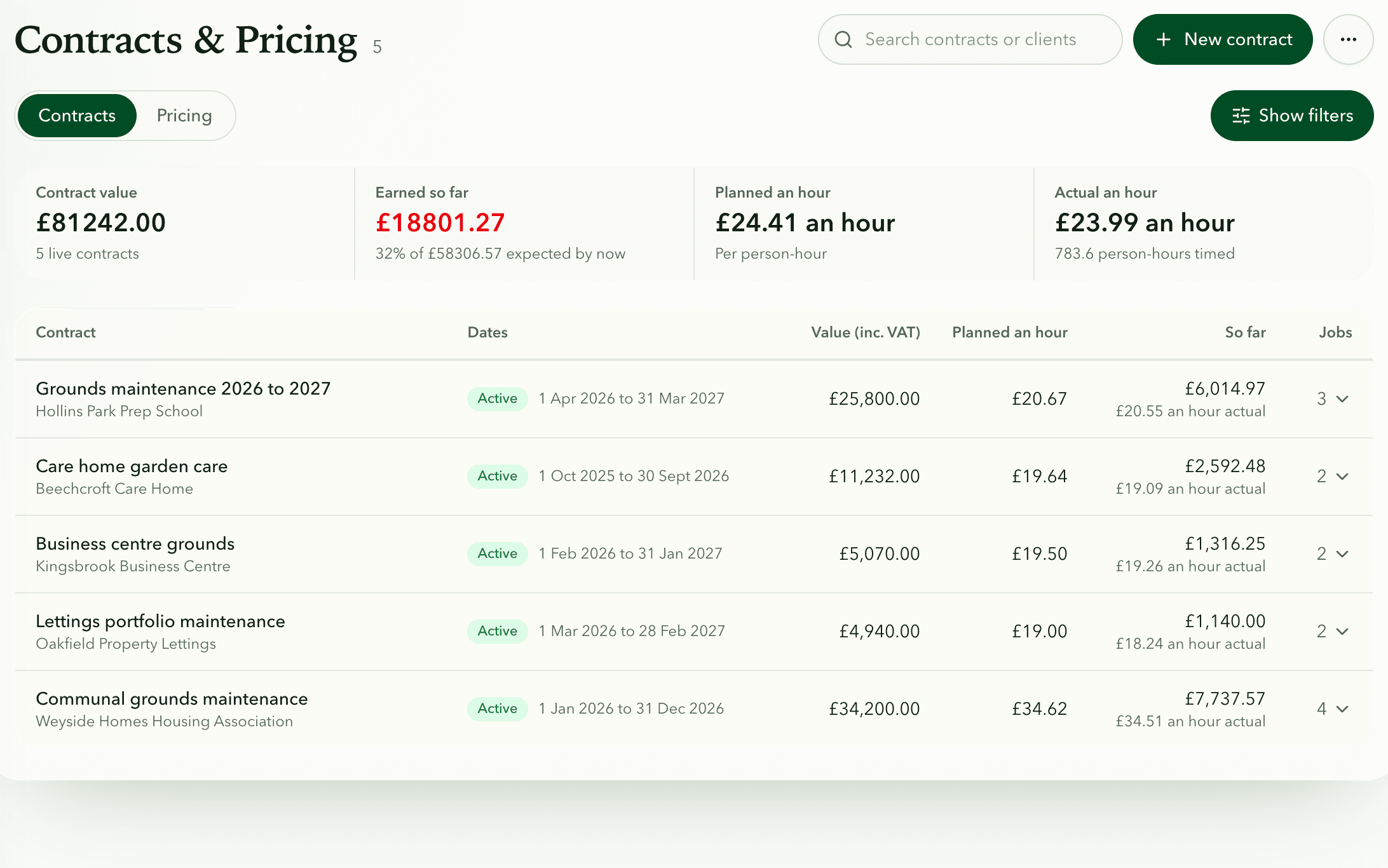
Each contract in Fieldfare holds its value, visits and renewal date, linked to the recurring jobs it covers, so the visits on the calendar are the ones the client pays for. April's renewals show in the contracts list in time to send the price review with proper notice.
Contract questions
How long should a garden maintenance contract be?
A page or two is enough for most domestic clients.
How much notice should either side give?
A few weeks is typical for domestic clients, and commercial contracts often run longer. Pick a period, write it down and use it for every client.
Should maintenance be priced per visit or per month?
Both work. Per visit is simpler to explain, while a fixed monthly amount spreads the cost evenly and suits seasonal visit patterns.
Can I just use a contract template?
A generic one gives you a layout, but the parts that matter (visits, scope, exclusions) have to be written for that garden. Use the list at the top of this guide to check nothing is missing.